Protect essential antibiotics
Reducing inappropriate antimicrobial use in food-producing animals protects medicines needed in human care.
WHO guidelineGreen Antibiotics designs defined, plant-derived antimicrobial combinations for poultry and aquaculture. We have reproducible in-vitro activity against MRSA and multidrug-resistant Salmonella Typhi — two organisms the World Health Organization ranks as high-priority pathogens4 — and a two-track route to market that reaches revenue in year one while the regulatory dossier is built behind it.
WHO describes food, direct animal contact and environmental pathways through which resistant bacteria may move from food-producing animals to people. The relative importance of each route varies, but the One Health connection is clear4.
Reducing inappropriate antimicrobial use in food-producing animals protects medicines needed in human care.
WHO guidelineAnimal, food, environmental and human-health systems are connected, so no single-sector solution is sufficient.
WHO · FAO · WOAHResistance to commonly used antimicrobials remains high in important food-chain bacteria.
Surveillance evidenceA useful feed solution must be standardised, stable, safe, affordable and supported by target-animal evidence.
Development standard
Deaths directly attributable to bacterial AMR forecast between 2025 and 20501.
Annual global GDP at risk by 2050, against US$28 returned for every US$1 invested in action6.
Attributable deaths projected for South Asia alone — the highest regional burden anywhere1.
Single plant extracts have been fed to animals for decades with inconsistent results. Avix applies drug-discovery method instead: literature-guided compound selection, AI and machine-learning-assisted analysis, and defined multi-compound cocktails screened systematically against priority pathogens. The platform is built to produce a pipeline of candidates, each matched to a species, pathogen and production system.
← Swipe chart to see full scale
Disc diffusion, clinical isolates, repeat assays. Larger zone = greater antibacterial activity. Zone diameters cannot be used to rank potency against a structurally different comparator; see Evidence for full interpretation and limits.
Green Antibiotics was designed and run jointly by Dr Md Arif Sheikh, a molecular and structural biologist with more than nineteen years in drug discovery, and Dr David Brown, the drug discoverer who introduced the antibiotic resistance breaker concept in Nature Reviews Drug Discovery5.
Avix has already carried a product from laboratory concept through formulation, a completed human clinical study and manufacturing coordination. That operational track record is what turns a screening result into a programme.
We are early. There is reproducible in-vitro proof of concept, a defined pipeline and a costed twelve-month plan. There is no filed IP yet, no animal data and no authorised product. The round exists to close exactly those gaps, in that order.
Our results to date are in-vitro screening data. They do not demonstrate efficacy in live animals, and they say nothing about safety, residues or withdrawal periods. No Green Antibiotics product is authorised for sale in any market. Any statement about performance in animals will be made only when in-vivo data supports it.
Antimicrobial resistance is not a forecast risk. It is a measured, rising burden that has already killed more than a million people a year, every year, since 19901. Animal agriculture is one of its largest single drivers — and the sector's own economics now depend on solving it.
The 2024 GRAM analysis drew on more than 520 million records across 204 countries and projects a steep rise in bacterial AMR to mid-century1.
← Swipe chart to see full scale
FAO-led projection published in Nature Communications, 20252. The right-hand bar is the same study's optimised-productivity scenario — evidence that the trajectory is a choice, not a given. Asia and the Pacific are projected to account for close to two thirds of global livestock antimicrobial use by 2040.
Most veterinary antimicrobials are not used to treat an identified sick animal. They are administered across flocks and ponds in feed and water — and in some countries, still to make animals grow faster.
Nearly 20% of WOAH member states report antimicrobials used as growth promoters. Eleven per cent report colistin used for that purpose — a drug the WHO classifies as highest-priority critically important for human medicine.
China alone accounted for approximately 32,776 tonnes of veterinary antimicrobial use in 2020, and hotspots of use are overwhelmingly in Asia, which represents around 67% of the global total3.
The EU banned antibiotic growth promoters in 2006 and further restricted routine prophylactic use under Regulation (EU) 2019/610. Producers exporting into these markets need alternatives, not exemptions.
Resistance genes selected in poultry houses and fish ponds move through meat and eggs, through direct contact with animals, and through manure applied to land and run-off into water. Salmonella colonises the poultry gut and reproductive tract and spreads through asymptomatic carriers. MRSA transfers to humans through handling and consumption.
This is why reducing antibiotic use in animals is a human-health intervention, not only an agricultural one. It is also why the same intervention attracts policy support, development finance and buyer-side pressure simultaneously — three funding tailwinds that rarely align.
Extensively drug-resistant Salmonella Typhi, which emerged in Pakistan carrying a plasmid encoding resistance to both fluoroquinolones and third-generation cephalosporins15, left azithromycin as the only broadly effective oral treatment across South Asia. Azithromycin resistance was then reported — first in Bangladesh — caused by a single point mutation in the AcrB efflux pump7. This is the specific organism, in the specific region, where our lead candidate shows its strongest in-vitro activity.
The 2024 EcoAMR modelling, produced by WOAH with partners across 204 countries, is the first to forecast the health and economic burden of AMR for humans and food-producing animals together.
Potential annual global GDP loss by 2050 under unchecked resistance6.
Potential cost of resistant pathogens spreading from livestock to humans6.
People whose food supply could be jeopardised by AMR-driven livestock losses6.
Returned for every US$1 invested in drug innovation and health-care improvement now6.
FAO's 2026 assessment reaches a consistent conclusion: over the long term, the cost of inaction on antimicrobial resistance is roughly six times the cost of action11. Alternatives that reduce reliance on antibiotics in animal production are no longer only an ethical argument — they are the cheaper path.
A conventional antibiotic usually acts on one molecular target, and a single mutation can defeat it. We design defined cocktails intended to act on several bacterial targets at once — the same logic that underpins combination therapy in tuberculosis and HIV.
A repeatable four-stage process, run to drug-discovery standards rather than feed-industry standards.
Choose feed-compatible plant antimicrobials with published activity and a scalable, traceable supply.
Fix defined ratios so each cocktail engages membrane, efflux and biofilm targets together.
Test every cocktail against resistant clinical isolates alongside a conventional antibiotic comparator.
Advance only reproducible leads: seven progressed and thirty-four were formally stopped.
Carvacrol, thymol and related phenolics are well studied and can act on several bacterial vulnerabilities.
Carvacrol and thymol can disrupt and depolarise bacterial membranes, increasing permeability8.
Thymol and carvacrol can inhibit efflux and reduce tetracycline MIC two- to eight-fold in combination9.
Both compounds can prevent biofilm formation and reduce established biofilms, with additive or synergistic effects8.
Dr David Brown proposed restoring failing antibiotics with non-antibiotic resistance breakers in Nature Reviews Drug Discovery5.
Our funded programme tests both replacement activity and whether the cocktails can reduce the effective dose of conventional drugs.
Azithromycin resistance in S. Typhi can arise from an AcrB efflux-pump mutation7. The same pump class is reported to be inhibited by carvacrol and thymol9.
This is the rationale for funded mechanistic testing of our specific cocktails; it is not yet a demonstrated mechanism in our isolates.
MRSA is a WHO high-priority pathogen4 whose attributable deaths more than doubled from 1990 to 20211. It also affects poultry and can transfer through handling and food.
Fluoroquinolone-resistant S. Typhi is the highest-ranked community-acquired pathogen on the WHO 2024 list. WHO links much non-typhoidal Salmonella resistance to antibiotic use in animal husbandry4.
A slower path to resistance remains a hypothesis until serial-passage testing is complete.
Plant-derived does not automatically mean safe. Toxicity, residues and performance under high pathogen challenge still require formal testing12.
Compound identities, ratios and combination logic remain confidential until patent filing protects novelty.
The cited compound classes describe the public literature, not our formulations. Detailed data are shared under NDA.
What we tested, what we found, what it means and what it does not mean. We would rather be believed than impressive.
Methicillin-resistant Staphylococcus aureus — a WHO high-priority pathogen. The comparator disc is barely ringed. The triple-cocktail disc carries the widest clear zone on the plate.
Multidrug-resistant Salmonella enterica serotype Typhi — the highest-ranked community-acquired pathogen on the WHO 2024 list. Zones follow the same stepwise pattern, reaching 20 mm.
Disc diffusion on clinical isolates, repeat assays. Numbered discs correspond to the five test conditions. Compound identities and ratios are withheld pending patent filing. Photographs are of our own plates; labelling has been redrawn for clarity.
Forty-one candidate combinations were screened against clinical MRSA and multidrug-resistant Salmonella Typhi by repeat disc diffusion. The chemical antibiotic comparator was tested at 30 µg. A single Green Antibiotic compound was tested at 600 µg; dual and triple cocktails used 600 µg per component.
ResultThe chemical comparator showed little or no inhibition in these resistant isolates. Green Antibiotic activity increased stepwise from single to dual and triple cocktails: 10–12 mm, 14–18 mm and 15–20 mm respectively.
The repeat, stepwise increase is the core proof of concept and the reason development focuses on defined cocktails.
Disc diffusion measures agar-zone diameter, not dose-normalised potency. The graph presents the observed zones for simple comparison; it does not claim equivalence between 30 µg chemical and higher-dose plant-derived test articles.
Repeat inhibition of two multidrug-resistant clinical isolates provides a credible in-vitro proof of concept and supports the next stage of investment.
The next phase converts that signal into dose-normalised MIC/MBC, mechanism, stability, safety and live-bird evidence. The present data are not yet animal-efficacy or safety results.
Independent replication and peer review are included in the funded programme.
This is the specification the programme is designed to meet — the standard a Green Antibiotics product must hit before it goes to market. Each line is a target with a study attached to it, not a result we already hold. We publish it because investors are entitled to see what "success" means here, and to hold us to it.
Target: no accumulation in meat or eggs. Test: residue analysis within the broiler study.
Target: use permitted through to slaughter. Test: depletion data and regulatory classification.
Target: normal health and performance at the intended dose. Test: safety and tolerance arms.
Target: seven characterised, shelf-stable cocktails. Test: MIC panel and stability data per lead.
These are development targets, not current claims. Essential-oil compounds can be toxic at high concentrations, and volatility or instability can limit simple formulations17. Residue, tolerance and stability studies will decide whether each target is met.
Raw plate images, measurement tables, repeat data and the screening protocol are shared with investors, prospective partners and scientific collaborators on request.
We publish the denominator, not only the seven that progressed. A screening claim without its denominator is a marketing claim. That is the standard either founder would apply to a pharmaceutical programme, and it is the fastest way to tell whether a result is real.
Seven confirmed leads, a category already worth more than a billion dollars, and a deliberately conservative view of the ground we can take first. Here is the pipeline, the market behind it, and the incumbents we intend to out-evidence.
← Swipe chart to see full scale
Central case: Grand View Research, $1.05bn (2024) to $1.48bn (2030), 6.04% CAGR13. Upper: Strategic Market Research, $2.14bn by 2030. Lower: Mordor Intelligence, $955m on a narrower category definition.
Market estimates vary because analysts define phytogenic additives differently. We plan against the conservative estimate, while recognising the broader category may be more than twice as large.
Seven defined three-compound cocktails progressed from 41 screened combinations. Every lead has reproducible in-vitro activity; none is presented as animal-validated or market-ready.
Composition remains confidential pending IP filing. All seven leads are in-vitro confirmed within the screening programme; efficacy, safety, residues and withdrawal characteristics in live animals remain to be established.
The commercial goal is one practical supplement covering the major bacterial pressures in poultry through multi-target, plant-derived chemistry.
Plant phenolics can disrupt membranes, ion transport, efflux, energy production and biofilms, supporting broad activity across key poultry pathogens18.
Published live-bird studies report reductions in Salmonella and Campylobacter and beneficial shifts in gut flora18. Our programme tests whether defined cocktails improve consistency and effect.
A 2025 study found oregano–rosemary combinations showed partial or full synergy against poultry E. coli and Salmonella, strongest at acidic gut-like pH19.
This supports our dual-cocktail formulation strategy and is tested directly in the funded programme.
Food-safety and export risk; carried in the gut and spread through eggs, meat and litter.
The main cause of colibacillosis, raising mortality and carcass condemnation rates.
Drives necrotic enteritis and performance loss where antibiotic use has been reduced.
A leading foodborne pathogen and a major retailer-led control target in export markets.
Every AV-01 to AV-07 cocktail has reproducible in-vitro confirmation within the screening programme. The broad “all major poultry pathogens” product goal still requires expanded testing against E. coli, C. perfringens, Campylobacter and live-bird validation. We distinguish confirmed in-vitro leads from future product claims.
The category has substantial incumbents with distribution we do not have. Our route in is evidence they have not generated, in a segment they under-serve.
| Player type | Examples | Strength | Where we differentiate |
|---|---|---|---|
| Global nutrition majors | Cargill, DSM-Firmenich, Adisseo, IFF, Land O'Lakes | Distribution, regulatory capability, capital | Positioned on performance and gut health rather than defined activity against named resistant pathogens |
| Phytogenic specialists | Delacon, Phytobiotics, Kemin, Anpario | Category expertise, established products | Few publish controlled data against named multidrug-resistant clinical isolates |
| Regional producers | Local South Asian manufacturers | Price, proximity, relationships | Minimal characterisation, inconsistent potency, no dossier ambition |
| Green Antibiotics | — | Drug-discovery screening discipline; 7 leads from 41 screened cocktails | No distribution, no authorisation, no revenue. That is what this round addresses |
Cost parity with in-feed antimicrobials, using regional raw materials.
One broiler cycle shows the effect on mortality, weight and feed conversion.
Export producers need compliant alternatives as UK and EU rules tighten.
Two regulatory routes with very different timescales, run deliberately in parallel so the fast one funds and de-risks the slow one.
Every item is fundable, measurable and dated. Nothing here depends on an approval we do not control.
The first use of funds. Until priority applications exist the combinations are unprotected and the company is hard to value. Filing also unlocks the scientific disclosure needed for partnership discussions.
Converts screening data into the characterisation data regulators and partners recognise. Serial passage answers the central scientific question: does resistance develop more slowly against a three-target combination?
Determines dossier scope and what may lawfully be claimed in each market. Whether the product is a feed material, a zootechnical additive or a veterinary medicine changes cost, timeline and value materially.
The single result that determines whether this becomes a product. Designed to EFSA data standards so the same study serves both regulatory tracks rather than being repeated later at full cost.
Batch-to-batch consistency is this category's documented failure mode. Botanical potency varies with growing conditions, harvest and extraction, so a validated potency assay is a competitive asset in itself.
Converts a laboratory result into a route to a customer.
Revenue, field data, and proof that producers will pay — the three things that change the terms of the next round.
The capability the founding team does not currently have, recruited once there is data worth commercialising.
EU feed additives require EFSA evaluation and authorisation. The complete path commonly takes three to four years10.
The same barrier creates a renewable ten-year authorisation and a durable competitive moat.
Track A targets a lawful botanical feed-material launch without therapeutic claims, while Track B builds the European dossier in parallel.
The first poultry study will be designed to EFSA data standards, so commercial evidence can also support the later European dossier.
One stronger study avoids repeating the same work and protects both time and capital.
Green Antibiotics is not a founder with an advisor. The screening programme was designed and run jointly, combining structural biology with four decades of antibacterial discovery experience.
Microbiologist, molecular and structural biologist with more than nineteen years in drug discovery. He designed and led the 41-combination screening programme and the UK–Bangladesh development route. Throughout his career, he has played a key role in resolving the structures of over 45 proteins, now included in the Protein Data Bank.
Experienced drug discoverer and biotechnology advisor. Co-Inventor of Viagra, contributor to Relpax, and originator of the antibiotic resistance-breaker concept5. Medicines linked to his discovery career have generated more than US$50 billion in sales. He co-designed the cocktail strategy and lead-selection framework.
The feed industry has treated plant extracts as nutrition. We treated them as chemistry — selected against defined targets, combined deliberately, and screened until something either worked repeatedly or was dropped.
Dr Md Arif Sheikh, Founder & Chief ExecutiveTwo people from different ends of antibacterial research produced a programme neither would have designed alone.
Two serious resistant organisms, chosen deliberately.
Defined ratios, designed to hit several targets.
Seven of forty-one progressed. We publish all forty-one.
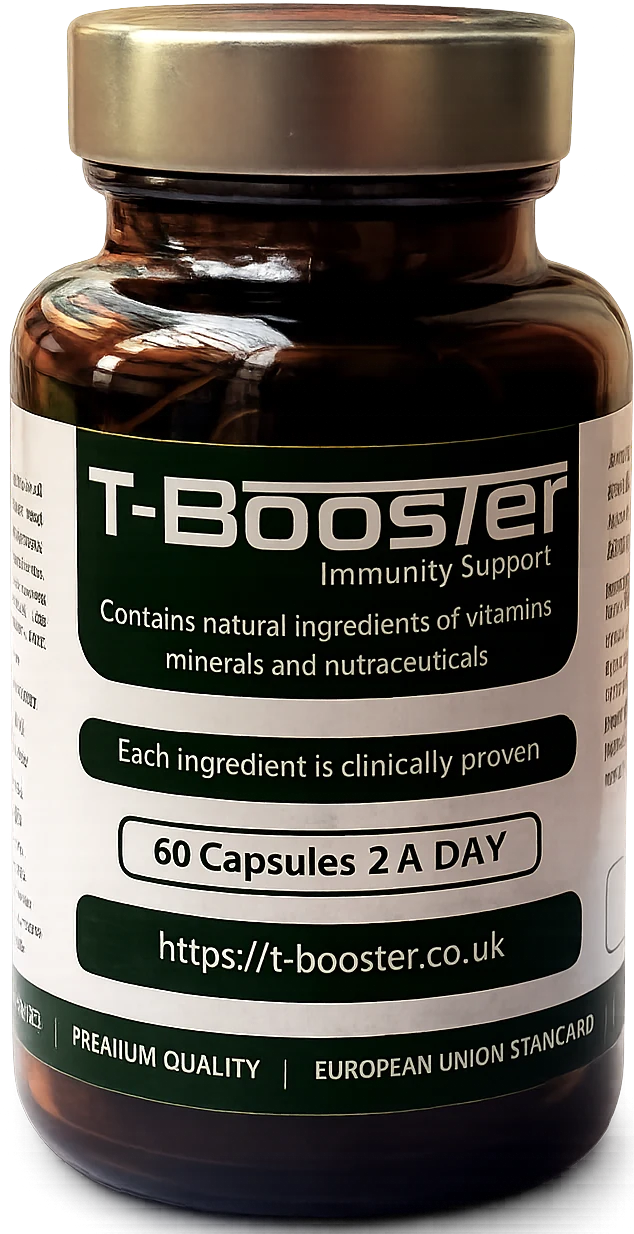
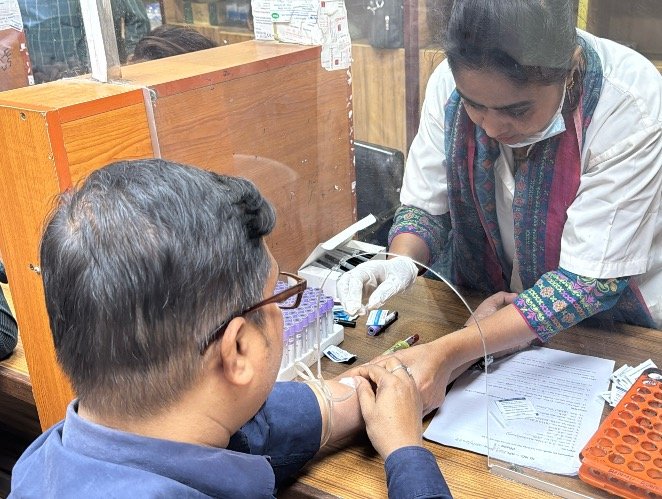
Green Antibiotics is run by the same Avix Pharmaceuticals team that designed, ran and completed a 260-volunteer human clinical study for T-Booster — clinicians, microbiologists, pharmacists, coordinators and commercial staff who have already taken one product from laboratory concept to completed trial.


Clinical research team as constituted for the Avix clinical programme. Photographs courtesy of Avix Pharmaceuticals Limited.
Green Antibiotics is backed by the wider Avix Pharmaceuticals team, spanning microbiology, molecular biology, drug discovery, pharmacy, formulation, data science, manufacturing, regulatory planning and commercial development.
Avix has already shown it can translate a scientific concept into a structured product-development programme through the development and clinical evaluation of T-Booster — from laboratory research through formulation, a completed human study, manufacturing coordination and commercial preparation. That experience is the foundation for advancing Green Antibiotics from screening to market.
We are early-stage with in-vitro proof of concept, no filed IP and no product on the market. This page says exactly what stage we are at and what the money buys.
A billion-dollar phytogenic category is growing at about 6% a year, with antimicrobial replacement already a leading application13. Regulation is also reducing routine antibiotic use in key export markets10.
Livestock antibiotic use is still projected to rise almost 30% by 20402, while AMR action is modelled to return US$28 for every US$1 invested6.
Green Antibiotics combines reproducible in-vitro leads with a twelve-month plan to filed IP, live-bird evidence and first revenue.
Indicative allocation. Final figures are in the investor pack.
Prior-art work and priority patent filings before further disclosure.
MIC/MBC, resistance, mechanism, safety and independent verification.
One controlled broiler trial designed to EFSA data standards.
CMO batches, potency assay, stability and controlled sourcing.
Classification advice for Bangladesh, UK and EU pathways.
Add animal-health regulatory and commercial execution capability.
Every early-stage investment carries risk. These are the specific ones here.
Agar activity may not reproduce in a live bird; the broiler study is the first gate.
The combinations stay unprotected until priority patent applications are filed.
Classification sets dossier scope, cost and timeline differently in each market.
Botanical potency must be controlled across harvests, suppliers and extraction batches.
Large incumbents hold the distribution; our differentiation has to be stronger evidence.
Phytogenics can underperform antibiotics under heavy challenge; cocktails must close that gap.12
Listing risks is easy. What matters to an investor is whether the plan retires them in a defined order, at a defined cost, with people who have done it before. Every mitigation below maps to a funded, dated deliverable in the twelve-month plan.
Run the live-bird study early; published work already supports this compound class in poultry.18
File priority patent applications before any further disclosure, publication or partner discussion.
Confirm classification early and run the fast regional route beside the EFSA dossier.
Control botanical variability through potency specifications and a formal stability programme.17
Compete on named-pathogen, resistant-isolate evidence that the large brands do not publish.
Multi-compound synergy is supported by published poultry work and our own screening.19
Avix has already moved T-Booster from laboratory concept through a completed 260-volunteer human study, manufacturing coordination and commercial preparation.
Dr David Brown adds senior discovery experience, Viagra co-invention, Relpax contribution and the published resistance-breaker concept5.
The same organisation carried that programme through UK manufacturing coordination, a completed 260-volunteer study and commercial preparation — the operational sequence Green Antibiotics now repeats.
The round buys four re-rating milestones: filed IP, MIC data, resistance testing and one controlled poultry study.
Bangladesh operations provide a lower-cost base in the highest-burden AMR region1, while the UK company holds IP and the international regulatory pathway.
Investor deck, screening data, twelve-month plan, financial model and regulatory strategy. Released under NDA. We reply within one working day.
Investor, licensing, distribution, scientific and producer enquiries. Messages reach the founding team directly, and we aim to reply within one working day.
Fields marked * are required. Scientific detail is shared under NDA — just say so below and we will send one with our reply.
Compound identities, ratios and the full screening data set are shared only under a non-disclosure agreement. Tell us what you need and we will attach an NDA to our reply.
Peer-reviewed literature, intergovernmental reports and named market research. Where a claim on this website carries a number, this is what it refers to. Where we make a claim that has no citation, it is our own unpublished data and is labelled as such.
The 41 screened combinations, the 7 selected leads and the zone-of-inhibition measurements presented on the Evidence page are Avix Pharmaceuticals' own unpublished in-vitro data. They have not been peer reviewed or independently replicated, and no citation exists for them. Independent CRO verification and publication are planned in the funded phase. Compound identities and ratios are withheld pending patent filing.
How AVIX Pharmaceuticals Limited handles personal data collected through this website.
We collect only the information you choose to send us through the enquiry forms on this website: your name, organisation, email address, country, enquiry type and message. This website does not use advertising or third-party analytics cookies.
We use your details solely to respond to your enquiry and, where you have asked for investor materials, to send those materials and follow up. We do not sell, rent or share your personal data with third parties for marketing purposes.
We process this data on the basis of your consent and our legitimate interest in responding to enquiries about our business.
Enquiry correspondence is retained for as long as necessary to deal with your enquiry and any resulting relationship, and is then deleted.
Under UK GDPR you have the right to access, correct, or request deletion of your personal data, to object to processing, and to lodge a complaint with the Information Commissioner's Office. To exercise any of these rights, email hello@greenantibiotics.co.uk.
This website embeds video from YouTube using its privacy-enhanced (no-cookie) domain, and loads fonts from Google Fonts. These providers may process technical data such as your IP address when that content loads.
The terms on which this website is made available.
This website is operated by AVIX Pharmaceuticals Limited, registered in England and Wales under company number 11299779, with its registered office at Suite 01, 195–197 Wood Street, London, E17 3NU, United Kingdom. “Green Antibiotics” is a development programme of AVIX Pharmaceuticals Limited.
You may view and print pages from this website for your own reference. You may not reproduce, republish or redistribute material from this site for commercial purposes without our written permission.
All content on this website, including text, graphics, data visualisations and the Green Antibiotics name and logo, is owned by or licensed to AVIX Pharmaceuticals Limited. Compound identities, ratios and combination logic are confidential and are not disclosed here.
This website is provided on an “as is” basis. Scientific information is presented in good faith and reflects our understanding at the time of publication, but we give no warranty that it is complete, current or error-free.
These terms are governed by the laws of England and Wales, and the courts of England and Wales have exclusive jurisdiction.
What this website stores on your device.
This website does not set any advertising, profiling or analytics cookies of its own. It does not track you across other websites.
Two third-party services are loaded on this site:
You can block or delete cookies through your browser settings. Doing so will not prevent you from using this website.
Important limitations on the scientific and financial information presented here.
All results presented on this website are in-vitro screening data generated by AVIX Pharmaceuticals Limited. They have not been peer reviewed or independently replicated. They do not demonstrate efficacy, safety, tolerability or absence of residues in live animals, and must not be interpreted as doing so.
No Green Antibiotics product is authorised for sale in any jurisdiction. Nothing on this website is an offer to sell a veterinary medicinal product or feed additive, or a claim that any product prevents, treats or cures disease in animals or humans.
Literature cited on the References page describes the general properties of plant-derived compound classes and the epidemiology of antimicrobial resistance. Citation of that literature is not a claim that our formulations reproduce those published results.
Timelines, market estimates, projections and development plans are forward-looking statements based on assumptions current at the date of publication. They are subject to scientific, regulatory, commercial and financial risks, and actual outcomes may differ materially.
Nothing on this website constitutes an offer, invitation or inducement to invest, or financial, legal or tax advice. Prospective investors should take independent professional advice.